
Safe, paid, attributed, community-driven: my intentions for openness in 2026

I started this post intending to 'look back' (a year in review), but found my spirit lowering as I described loss of power and fear - what has felt like an extraction of open culture, value and effort in service of the already very powerful; the role of tech in the decline of democracies and human rights...
I don't do well, however, lingering in this space of loss and dread. I am an optimist by nature and thus focusing on a vision of the world I want to see is so much more motivating and empowering.
Inspired by the principles of the Folk Tech community and the 'Return to Light' Open Source Practitioner call held late last month, I've decided channel energy into positivity - on a vision for I want to see happen and ultimately work on in 2026:
This builds on my personal and paid work of the last year, and gives me a sense of purpose, camaraderie and hope for 2026. I have listed specific goals below. Interested in collaborating? Please get in touch or see links to join in specific efforts.
(Safe)
Contributing to policy and efforts that ensure safe, inclusive digital spaces
I have long worked on inclusion and safety in digital in digital spaces, through code of conduct policy work, building incident response teams, and through metrics work and AI Alignment at CHAOSS (inclusive of AI safety).
In 2026 creating safe places for collaboration matters more than ever, and I am already working with communities evolving and updating their policy and response processes (will report back on that later in the year).
(Paid)
Make open source project sustainability need discoverable, clear, actionable and paid
The average user of open source, has zero visibility into the needs and risks associated with projects they depend on. Every new exploit gains attention for that particular project, and that particular problem - creating a hyper focus for a time. But this isn't true visibility. It's like waiting for a fire before you check the wiring in your house.
Open Source Wishlist is my effort - drawing on years as a funder, community builder, and maintainer, to make need and risk visible in dependencies through maintainer curation (who better knows what is needed). Using SBOM analysis to surface wishlists, industry-validated metrics to define need, and aligned rubrics to measure impact.
It's my hypothesis and experience that without clarity of need and impact, the funding piece very very difficult for the average user to advocate for. With 200 wishes in hand, and what is already an incredible group of OSS practitioners, I am dedicated to working with big and small funders interested in demonstrating their impact through action. I plan to collaborate on touch-points with the CycloneDX (SBOM) standard, and Open Source Economy doing parallel work.
(Attributed)
Make it clear who is moving the ecosystem forward (and who is missing)
Without attribution, it's guesswork as to who's really holding up the ecosystem and harder to recognize, reward and call out those who are missing. I have pitched this for many years and recently wrote this blog post - the topic has always been well received, but we actually need to do something now.
Building on Drupal's credit system and aligning with the Eclipse Foundation's CRA attestation effort, I plan to co-create attribution stand as a way to track ecosystem investment and recognize contributions that would otherwise go unseen.
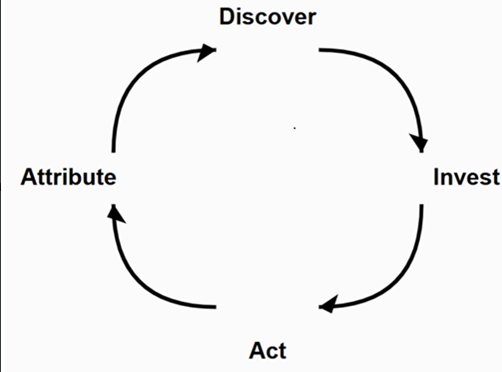
For my work, this start as a pilot within Open Source Wishlist specifically as the fourth milestone:
(Community-driven)
Create a community-driven space for open source AI
When I was laid off at Microsoft, I immediately looked for a community to join to help shape open source AI, but found absolutely nothing. Yes there are (a billion) product communities, and foundation-led initiatives, but all seemed to be in service, or comprised solely of members who also happen to represent companies; with strategy purely on developers.
I yearned for something that focused on advocacy, independent of company OKRs or financial goals.
My ongoing response to this, is to-create create a space for open source AI that's actually open shaped by everyone - not just developers but educators, librarians, students, scientists, OSS practitioners, environmentalists (and more) - as it was the origins the open web.
- Continue to co-chair the CHAOSS AI alignment working group (which will have a BoF session at CHAOSScon right before FOSDEM).
- Continue to run Open Source Practitioner touch points to connect around challenges and the future we want to build. Next meetup January 21st (subscribe here for future events).
- As part of Open Source Wishlist obtain funding for at least one AI Consent Framework (service).
Interested in leading a discussion on one of these calls? let me know!
Collaboration methods & funding my work
I do not , and will not work in isolation, and all of these goals will continue in collaboration with Ecosyste.ms, FolOpen Source Collectfive, Folk Tech, Open Source Practitioners the Eclipse Foundation attestation efforts (Aeva Black), and through touch-points with the Open Source Practitioner community calls and events like FOSDEM.
Most (but not all) of my goals are on unpaid right now. I am building, as I said in the intro, a vision for what I want to see and work on. I do hope (as part of my put food on the table plan) that I can secure a grant, or other funding as the year unfolds, and the value becomes clearer.
Support in general is welcome through Open Collective or GitHub sponsors.
In closing
Safe. Paid. Attributed. Community-driven. That's the open I want to build with all of you in 2026.